Hiroshima Uni Tech Detects Invisible Early Collagen Changes for Advanced Skin Ageing Prevention
Researchers at Hiroshima University developed a new method to identify subtle, early-stage changes in skin collagen's internal structure. This approach detects molecular disorganization before visible damage, potentially informing future cosmetic and medical applications.

New Detection Method for Collagen Degradation
Japanese scientists at Hiroshima University have developed a new technique to identify early structural changes in human skin collagen. This method detects damage at a molecular level before it becomes visible on the skin surface. The findings, published in ACS Nano, show that collagen's hidden internal organization begins to degrade well before its fibers thin or break apart.
Traditional imaging techniques often miss these initial, subtle signs of damage, according to Ali Haider, first author of the study and a research fellow at Hiroshima University's International Institute for Sustainability with Knotted Chiral Meta Matter (WPI-SKCM²). The team states their approach reveals a collapse in collagen's molecular organization that conventional tools do not.
Revealing Hidden Molecular Patterns
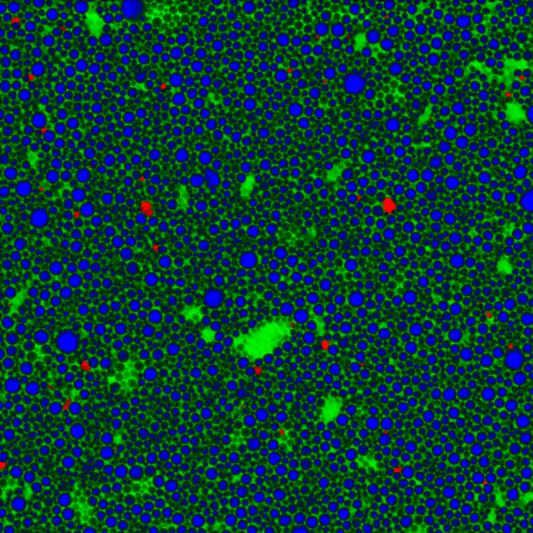
To uncover these hidden patterns, the research team integrated advanced optical imaging with chiroptical spectroscopy. This framework included synchrotron radiation vacuum-ultraviolet circular dichroism (SR-VUVCD) and multi-dimensional quantum cascade laser vibrational circular dichroism (MultiD-QCL-VCD).
This combination allowed researchers to map both the presence of collagen and its chiral structural coherence within the exact same physical tissue section. The study demonstrated a clear decoupling between collagen mass and its structural order.
Tissue samples maintained their overall bulk collagen content and coverage even as their underlying supramolecular chirality coherence significantly degraded.
Implications for Asia's Beauty Industry
Katsuya Inoue, a WPI-SKCM² professor and corresponding author, noted that collagen should be understood as a hierarchical material whose function depends on organization across multiple scales, not solely as a visible fiber network.
This new detection method could provide insights for various applications, including medical interventions, wound healing, and the design of biomaterials. For Asia's beauty industry, this research suggests a future where cosmetic product development could target these very early, invisible signs of collagen degradation.
Ingredient suppliers and beauty-tech companies may seek to develop new actives or diagnostic tools that address these molecular-level changes, potentially shifting focus towards preventative care before visible skin damage occurs.
Three newsletters, one newsroom.
The Beauty Brief delivers Asia's beauty week every Monday. Regulatory Radar tracks the rule changes that move markets. Trend Pulse decodes what consumers want next. All free to start.